Driving in Japan as a Foreigner: Licences, ETC, Speed Limits, Snow Tires
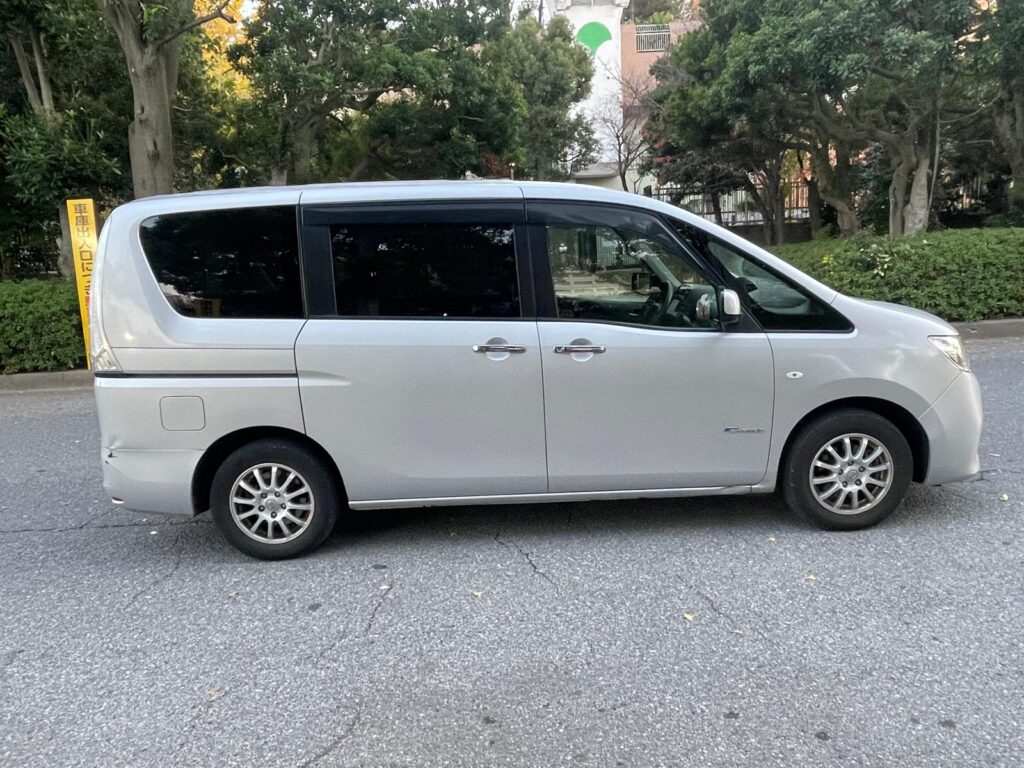
This is the short version of everything we wish the rental sites told first-time visitors. If you’ve never driven in Japan before, read this before you book — most of the questions we get over WhatsApp are answered below.
Which licence do I need?
It depends on where your licence is from. There are three categories.
Category 1: Countries covered by the 1949 Geneva Convention
If you’re from the US, UK, Canada, Australia, New Zealand, South Africa, India, most of the EU (Ireland, Netherlands, Sweden, Denmark, Finland, etc.), Singapore, Hong Kong, the Philippines, or Thailand, you can drive on an International Driving Permit (IDP) issued under the 1949 Geneva Convention. You must get it in your home country before flying — Japan does not issue them. It’s valid for one year from issue date.
You also need to carry your original home-country licence with you in the van. The IDP is a translation; it isn’t valid alone.
Category 2: Countries that require an official translation
If you’re from Switzerland, Germany, France, Italy, Belgium, Slovenia, Monaco, or Taiwan, the IDP doesn’t apply. You need:
- Your original home licence, plus
- An official Japanese translation from JAF (Japan Automobile Federation) or your home embassy. JAF charges ¥4,000 and can mail it to your hotel.
Category 3: Everyone else
If you’re from China, Vietnam, Indonesia, Russia, Brazil, or anywhere not in the lists above, you cannot drive on a foreign licence in Japan. You’d need to convert to a Japanese licence (a months-long process). Rentals are not available.
We check this on the booking form. If you’re unsure which list you’re on, send us a photo of your licence and we’ll confirm before you fly.
How the ETC card works
ETC stands for Electronic Toll Collection. Every expressway tollgate has an “ETC” lane that you drive through at 20 km/h while a small device under the dashboard talks to a sensor overhead. The system bills the linked card.
- Every van in our fleet comes with a pre-loaded ETC card. You don’t need to bring one or set anything up.
- You pay actual toll usage at the end of the rental — the toll meter is printed onto your invoice.
- ETC discounts apply automatically. Driving between 22:00 and 06:00 is 30% off. Holiday weekends are sometimes 30% off on rural expressways.
- If you accidentally take a “cash” lane, just stop at the booth and the attendant will swap to manual processing. It happens — no big deal.
The savings are real. A round-trip Tokyo → Sapporo via expressway in the Honda Stepwagon is about ¥9,000 less with the ETC discount than without.
Speed limits — the gap between law and practice
This is where guidebooks lie to you. The legal limits are:
| Road type | Legal limit |
|---|---|
| City streets | 30–40 km/h |
| Rural roads | 50–60 km/h |
| Expressways | 80–100 km/h (some sections 120 km/h, marked) |
The practical speeds are 10–20 km/h higher on expressways, and the police mostly tolerate it. But:
- City speed traps in Tokyo, Osaka, Kyoto are very real and not forgiving
- Hokkaido has aggressive expressway enforcement near Sapporo and Asahikawa
- Mountain roads — drive the posted limit. The hairpins are tighter than they look
If you get a ticket, you pay it at any post office within the timeframe shown. The rental company doesn’t pay for you; you’ll see the citation on your final invoice along with our admin fee (¥3,000).
Snow tires and winter driving
Hokkaido between mid-November and mid-April legally requires snow tires (or chains). Honshu mountains (Tohoku, Niigata, anywhere above 800m elevation) the same.
- All our vans switch to studless winter tires from December 1 to March 31 automatically — no extra charge
- Chains are in the boot for any trip that goes north of Sendai or above 1,000m
- If you’re heading to Hokkaido in February, plan an extra day on the schedule. The Daisetsuzan pass closes without warning during heavy snow
Drive conservatively. Studless tires grip well, but you don’t have the muscle memory of a Japanese driver who’s done it for thirty winters. Brake earlier, take corners 10 km/h slower, and don’t try to overtake on icy expressway sections.
The rules you actually need to know
A few that catch foreign drivers out:
- Drive on the left. Indicators are on the right of the steering column, wipers on the left. You will hit the wipers for the first day — everyone does.
- Stop signs are inverted triangles, not octagons. The character is 止まれ (tomare = stop). You must come to a full stop, not roll through.
- Zero alcohol tolerance. Not “below 0.05%”. Zero. One beer at dinner and you’ll fail the breath test in the morning. Fines start at ¥500,000.
- No right turns on red. Wait for the green arrow.
- Pedestrians always have right of way at zebra crossings. Stop, even if no one’s clearly stepping out — Japanese pedestrians often wait politely for the car to stop first.
- Headlights on automatic. Most modern Japanese cars (including ours) turn headlights on automatically in tunnels and at dusk. Don’t fight it.
Parking — the actual rules
- No overnight in regular parking lots. Convenience-store and supermarket lots are 24-hour, but they’re for shopping, not sleeping. You will be moved on by staff or police.
- Michi-no-Eki (roadside stations) explicitly allow overnight stops for “rest”. There are 1,200+ of them. Most are free.
- Designated RV parks (Auto Camp / Carmpa) charge ¥2,000–3,500/night and have power hook-ups and showers.
- Official campsites — ¥1,500–3,000, usually with toilets and water.
Sleeping in a city park, a public car park, or a beach lot is technically a grey area — police won’t always intervene but they can. We send a list of every safe overnight stop along your route in the trip PDF.
Fuel — where, how, how much
- Petrol stations are everywhere. Self-service (“セルフ”) stations are 5–10 yen/L cheaper
- Regular (レギュラー) is what every van in our fleet uses. Don’t put high-octane in unless we tell you to
- 2026 prices: ¥165–180/L depending on region. Hokkaido and Shikoku are the cheapest
- Most stations accept credit cards. Some rural ones don’t. Carry ¥10,000 cash for fuel emergencies
Insurance — what’s included, what’s not
Every rental includes:
- Comprehensive insurance with a ¥0–¥50,000 deductible depending on the vehicle
- Round-the-clock English roadside assistance
- JAF coverage (Japan’s auto-club — like AAA in the US or RAC in the UK)
Optional:
- Zero-deductible waiver: +¥1,500/night. Worth it if you’ve never driven on the left before.
Not included:
- Tickets and fines
- Damage to the underbody from off-road driving (don’t take the van off the asphalt)
- Wildlife strikes in Hokkaido are covered, but you pay the ¥50,000 deductible
What van to start with
If this is your first time driving in Japan, the Mazda Premacy or Honda Shuttle are the easiest first cars — low step-in, automatic, narrow enough for any street. Stepwagon and Odyssey are bigger and need slightly more attention in cities but are far more comfortable for long trips.
Any questions about your specific licence or country, message us before booking — we’d rather sort it out at the form stage than at handover.